Introduction
India is a country known for its vibrant traditions, rich cultural diversity, and classic style. Men’s ethnic clothing has a specific position among the various elements that represent the nation’s heritage. Ethnic apparel, which ranges from classic kurtas and sherwanis to dhotis and Nehru jackets, conveys culture, identity, and pride in addition to being fashionable.
Even if western apparel is becoming more and more fashionable, ethnic attire is still a crucial component of Indian men’s wardrobes. Wearing traditional clothing at a festival, wedding, religious function, or family get-together contributes to the preservation of the values and rituals that have been handed down through the centuries.
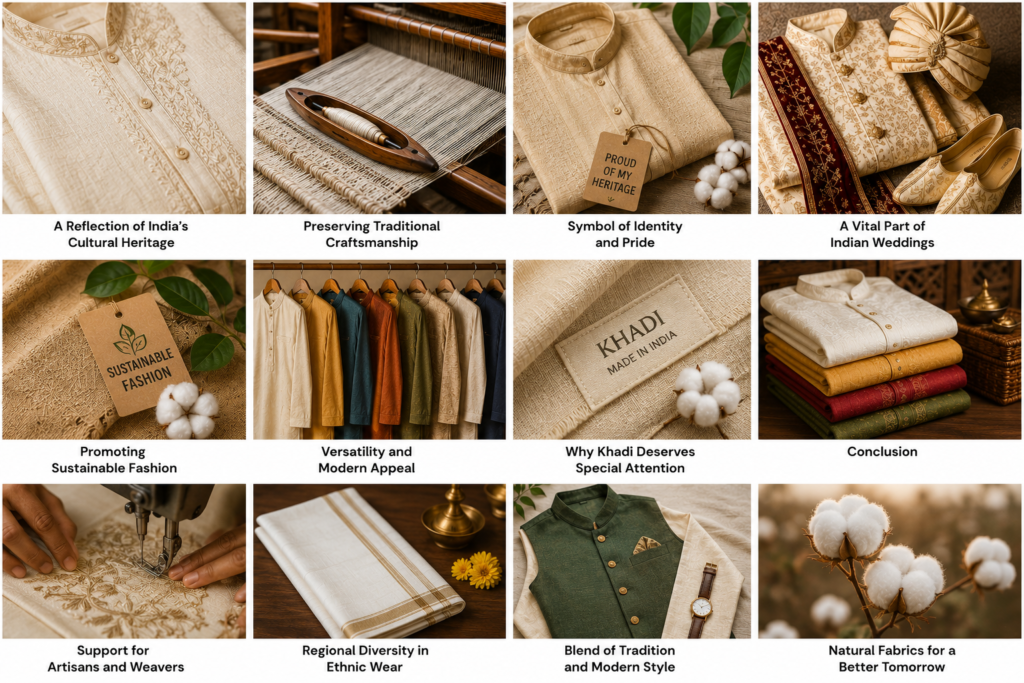
A Reflection of India’s Cultural Heritage
India’s customs are important to its cultural legacy, and clothing has long been a significant means of expressing these traditions. Different regions exhibit different materials, embroidery techniques, and craftsmanship in their ethnic clothing.
For example:
In North India, kurta-pajamas are very popular.
In South India, veshtis and dhotis are frequently worn.
In a number of northern states, Pathani outfits are popular.
Nehru and Bandhgala jackets are symbols of royal grace.
Preserving Traditional Craftsmanship
Indian ethnic wear supports thousands of artisans and weavers who create beautiful handwoven fabrics and intricate embroidery. Materials such as:
- Khadi
- Cotton
- Silk
- Linen
- Chanderi
- Banarasi fabric
are produced through traditional techniques that have been practiced for centuries.
Men who choose ethnic clothing support local companies and uphold India’s handloom and handicraft customs. This assistance benefits rural areas and encourages artisans to be self-sufficient.
Symbol of Identity and Pride
Men can show their cultural identity and stay connected to their heritage by dressing ethnically. During festivals and celebrations, dressing traditionally fosters a sense of pride and community.
During cultural festivals, many Indian expatriates proudly display their ancestry to the world by donning kurtas and sherwanis. National identity and solidarity are symbolized by ethnic clothing.
A Vital Part of Indian Weddings
Indian weddings are lavish, vibrant occasions where traditional attire is the main attraction.
Men traditionally wear:
Sherwanis: Ideal for grooms and wedding ceremonies.
Kurta Pajama Sets: Perfect for pre-wedding functions and family events.
Nehru Jackets: A stylish addition that offers a modern touch.
Bandhgala Suits: Known for their regal appearance and sophistication.
These outfits help maintain the grandeur and traditions associated with Indian weddings.
The Influence of Ethnic Wear on Indian Festivals
Festivals are an integral part of Indian culture, and traditional attire enhances the spirit of celebration. During occasions such as Diwali, Holi, Eid, Navratri, and Pongal, men often choose ethnic outfits to honor customs and traditions. Wearing kurtas, dhotis, or sherwanis during these celebrations creates a festive atmosphere and strengthens the bond between generations. Traditional clothing helps preserve the essence of these cultural events and adds elegance to every celebration.
Growing Popularity of Ethnic Wear Among Young Men
In recent years, ethnic wear has gained immense popularity among younger generations. Modern designs, innovative patterns, and fusion styles have made traditional clothing more appealing to today’s fashion-conscious men. Designers are combining classic craftsmanship with contemporary trends, allowing young men to express their individuality while staying connected to their roots. This revival of ethnic fashion has contributed significantly to keeping India’s traditions alive.
The Global Recognition of Indian Ethnic Wear
Indian ethnic clothing has earned recognition around the world for its intricate craftsmanship, luxurious fabrics, and timeless elegance. International fashion shows and celebrities have contributed to the growing popularity of Indian attire globally. Many people outside India appreciate garments such as sherwanis, bandhgalas, and kurtas for their unique style and cultural richness. This global appreciation has helped promote Indian textiles and traditional craftsmanship on an international scale.
Comfort and Practicality of Traditional Clothing
Apart from their cultural significance, ethnic outfits are highly comfortable and practical. Fabrics like cotton and khadi are lightweight, breathable, and suitable for India’s diverse climatic conditions. They provide ease of movement and can be worn throughout the year. The comfort offered by traditional clothing makes it a preferred choice not only for special occasions but also for everyday wear.
Ethnic Wear as a Fashion Statement
Traditional clothing has evolved beyond its conventional role and has become a major fashion statement. Men today experiment with Indo-western styles, pairing Nehru jackets with jeans or combining kurtas with modern accessories. Such combinations create a perfect balance between tradition and contemporary fashion. This versatility has enabled ethnic wear to remain relevant in the rapidly changing fashion industry.
Supporting the “Vocal for Local” Movement
Choosing Indian ethnic wear also aligns with the “Vocal for Local” movement, which encourages the promotion of indigenous products and industries. Purchasing handwoven and handcrafted garments supports small businesses, artisans, and rural communities. It contributes to the growth of the Indian economy and promotes self-reliance while preserving the country’s rich textile heritage.
Passing Traditions to Future Generations
Traditional clothing plays a vital role in passing cultural values and customs from one generation to another. When children and young adults see their elders wearing ethnic attire during important occasions, they develop an appreciation for their heritage. This continuity helps ensure that India’s traditions, craftsmanship, and cultural identity remain vibrant and relevant for future generations.
Promoting Sustainable Fashion
Natural and handcrafted materials are becoming more popular as consumers become more conscious of sustainable fashion. Eco-friendly fashion is promoted by ethnic clothing made of organic cotton and khadi.
Benefits include:
- Reduced carbon footprint.
- Support for handloom industries.
- Biodegradable materials.
- Less dependence on synthetic fabrics.
- Ethical and sustainable production methods.
Versatility and Modern Appeal
Today, men wear ethnic outfits for:
- Office celebrations.
- Casual gatherings.
- Cultural events.
- Formal occasions.
- Fashion statements.
Why Khadi Ethnic Wear Deserves Special Attention
In the history and fashion industry of India, Khadi holds a special role. Khadi is a symbol of simplicity, sustainability, and patriotism that is linked to the freedom movement and Mahatma Gandhi’s idea of independence.
Advantages of khadi ethnic wear include:
- Eco-friendly production.
- Elegant and timeless appearance.
- Suitable for all seasons.
- Supports rural artisans and weavers.
- Durable and long-lasting quality.
Conclusion
In India, men’s ethnic wear is a celebration of culture, heritage, and workmanship rather than just a piece of apparel. It fosters sustainable fashion, maintains traditional artistry, and links generations. Ethnic clothing still exudes grace, pride, and timeless appeal whether it is worn for festivals, weddings, or regular events.
Men’s ethnic clothing continues to be a potent representation of Indian identity even as fashion trends change. Men who dress traditionally not only respect their heritage but also help to preserve India’s rich cultural heritage for coming generations.